
Roofers
How to fix a leaking roof: find the fault and get it repaired
By Local Trades & Business Recommendations · Published
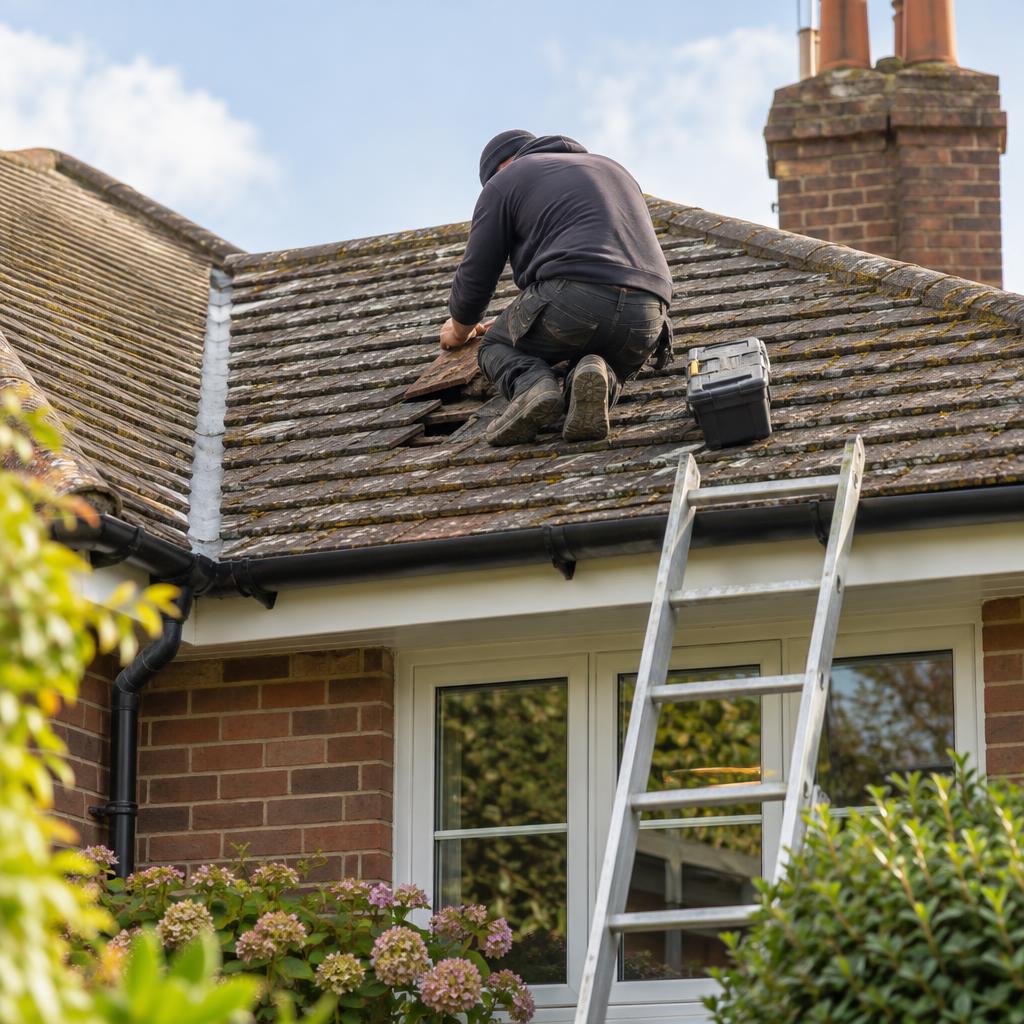
Find out what causes a roof leak, which repairs last, what a roofer’s quote should include and how to check the problem is genuinely fixed.
If you are wondering how to fix a leaking roof, the lasting solution is to find where rain enters and have a roofer repair the failed covering, flashing or junction—not simply seal the visible drip. Your role is to limit indoor damage, record the symptoms and arrange a safe inspection; roof access and repairs need a professional.
A ceiling stain does not reliably identify the fault above it. Water can travel along roofing underlay, rafters and pipes before appearing indoors. This guide focuses on tracing and repairing leaks in the main house roof, particularly tiled and slated roofs.
What should you do when you discover a leak?
Keep people away from a bulging or sagging ceiling, which may collapse. Do not poke a hole in it or stand underneath to investigate. Move belongings only where it is safe, and collect drips in a container without putting yourself beneath damaged plaster.
If water is reaching lights, sockets or electrical equipment, keep clear. Switch off the affected circuit only if you can reach and operate the consumer unit safely, without touching wet equipment or entering standing water. Otherwise, leave it alone and seek urgent electrical help.
Do not climb onto the roof, lean out of an upstairs window or put up a ladder to inspect the gutter. Wet roof coverings are especially hazardous, and even a small repair can involve fragile materials or an unsafe working position.
Once the immediate area is safe:
- Photograph the stain, drips and any damaged belongings.
- Note when the leak started and whether it followed wind, prolonged rain or a short downpour.
- Check your insurance policy and contact the insurer promptly if you may claim; keep receipts for urgent work.
- If you rent, report the leak promptly to your landlord or managing agent, preferably in writing.
For a leasehold flat, notify the freeholder or managing agent: responsibility for the roof will depend on the lease. Do not authorise work to a shared roof without checking who is responsible, unless following an agreed emergency procedure.
How can you help locate the source without going onto the roof?
Record patterns rather than guessing at a repair. Does water appear only when rain comes from one direction? Is the stain beside a chimney breast, below a roof window or near an external wall? Does it continue dripping after the rain stops?
These observations help a roofer choose where to investigate, but none proves the cause.
From ground level, look for missing or displaced tiles, visibly damaged flashing, debris in a roof valley and gutters overflowing during rain. Use your phone’s zoom rather than approaching an unsafe area. A roof can look sound from below while still leaking at concealed junctions.
An accessible loft may offer clues, but only enter if there is safe access and a secure boarded route. Never step between joists, touch wet wiring or disturb suspect materials. Stop if the space is unsafe.
From a safe position, note damp timbers, staining on the underside of the roof and water tracks. Photograph what you can see without moving insulation or opening the roof construction.
Not every damp patch is a roof leak. Plumbing faults and loft condensation can cause similar symptoms. Widespread moisture or droplets across the underside of the roof may suggest condensation, whereas a localised water track after rain may suggest penetration. A competent inspection should consider both rather than automatically prescribing replacement tiles.
Which repairs deal with the underlying cause?
The repair should match the defect. Ask the roofer to explain both where water enters and how it reaches the room below.
A cracked, slipped or missing tile or slate usually needs replacement or refixing with a compatible covering and suitable fixings. The roofer should also check the surrounding area. Repeated slipping may indicate deteriorated fixings or battens rather than one isolated failure.
Flashing makes junctions around chimneys, walls and other roof features weather-resistant. Split, displaced or poorly detailed flashing may need refixing, a properly designed repair or replacement. Smearing sealant over a moving junction is not equivalent to restoring a sound flashing detail.
Roof valleys carry water where two roof slopes meet. Debris can obstruct the flow, but leaks may also result from damaged lining or poorly positioned coverings. Clearing debris will not fix a split valley lining.
At the eaves, rain should discharge into the gutter rather than behind it. A roofer may need to correct deteriorated support or underlay details, while defective gutters may need clearing, realigning or repairing. Establish which component is failing before approving work.
Roof windows and other penetrations have their own flashing and weathering arrangements. Repairs should suit the particular installation, not rely on a general-purpose coating applied around every edge.
Underlay provides secondary protection beneath tiles or slates; it is not a substitute for a sound roof covering. If it has deteriorated, the roofer should explain whether local lifting and repair is feasible or whether wider work is needed.
How do you judge the proposed repair and quote?
Ask for photographs showing the defect and a written description of the work. “Seal roof leak” is too vague to tell you what is being repaired or whether the underlying problem is included.
A useful quotation should identify:
- The location and likely cause of the leak.
- Which coverings, flashings or other components will be repaired or replaced.
- The access arrangements, including scaffolding where necessary.
- Whether checks to exposed battens, underlay and timbers are included.
- How hidden defects and additional costs will be agreed before further work.
- Waste removal, weather protection and any guarantee terms.
Cost depends on access, roof height and pitch, the materials needed, the extent of concealed damage and whether specialist details are involved. A small visible defect can require substantial safe access, so compare the scope of quotes rather than just the total.
One leak does not automatically justify a replacement roof. Conversely, repeated patching may be poor value where coverings, fixings or underlay are failing across a wider area. If extensive replacement is recommended, ask for evidence and consider a second inspection.
Some reroofing work can require building regulations approval and improvements to insulation. Planning constraints may also apply, particularly to listed buildings or certain alterations. Requirements depend on the property and scope; check GOV.UK and your local council’s building control and planning teams. For a property in Southampton, that means Southampton City Council.
How can you tell whether the leak is properly fixed?
Before the roofer leaves, request photographs of the completed work and an explanation of anything that still needs attention. Keep the invoice, agreed specification and guarantee details together.
A controlled water test may help in some cases, but it should be planned and carried out by the professional. Indiscriminate hosing can drive water into places that normal rainfall would not reach and create misleading results.
After repair, monitor the area during subsequent rain, particularly conditions similar to those that caused the leak. Photograph the same spot to track changes. An old stain can remain after the entry point has been fixed, so its colour alone does not establish whether water is still entering.
Do not immediately cover the stain with paint or replace finishes around wet materials. Saturated insulation, plaster and timber need assessment, and drying time varies with how wet they are and the available ventilation. Confirm the leak has stopped and the affected materials are sufficiently dry before redecorating.
When to call a professional
Call a roofer whenever a suspected leak needs external inspection or repair. Roof work and working at height are not DIY jobs. Active water entry, loose roof materials, a sagging ceiling or suspected structural damage require urgent attention; keep clear of the affected area.
Use an electrician if water has affected electrical fittings or wiring. Notifiable electrical work must be handled by a registered electrician under Part P in England. If repairs affect a gas appliance or its flue, gas work must be done by a Gas Safe registered engineer.
Choose someone who can demonstrate the defect, explain the repair and provide a clear written scope. You can compare local, reviewed businesses on Local Trades & Business Recommendations and request quotes for free.