
Electricians
Trip switch: how to reset it safely and spot a fault
By Local Trades & Business Recommendations · Published
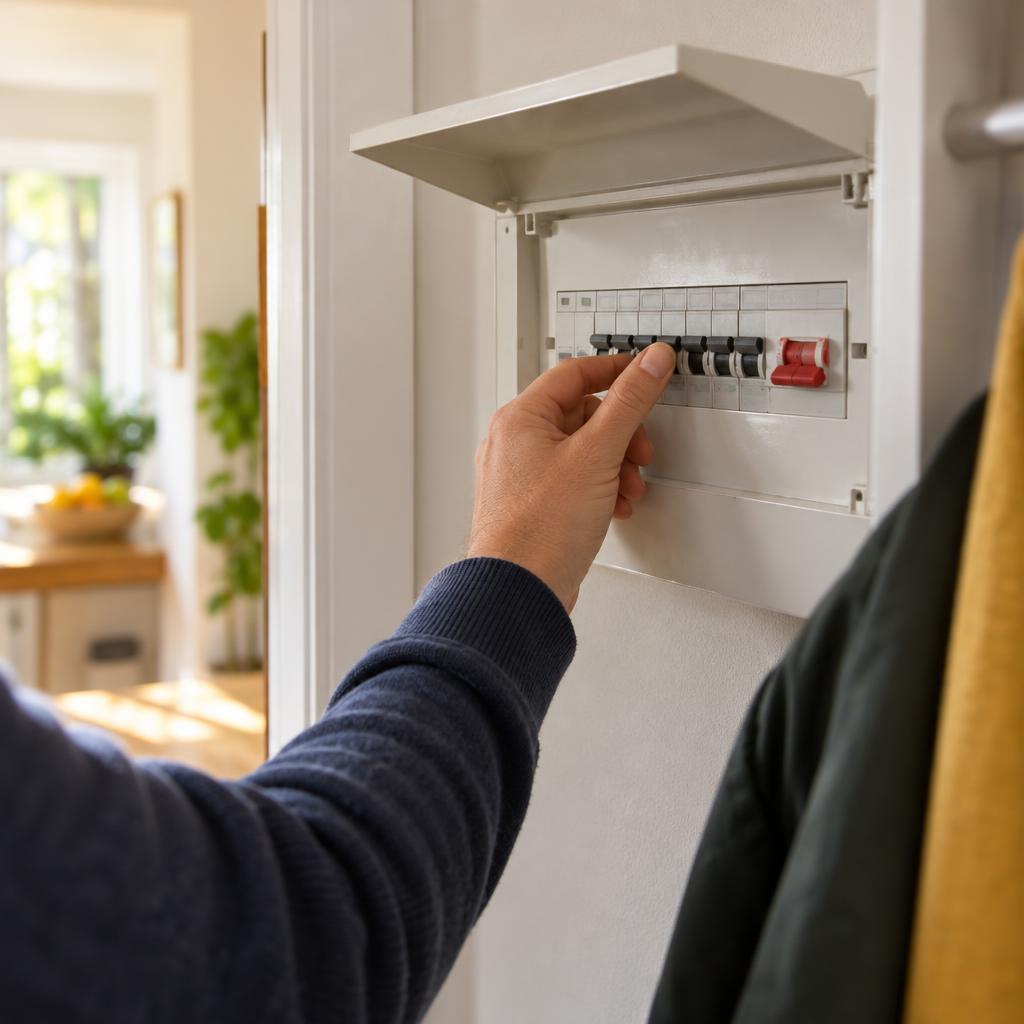
Find out why a trip switch goes off, when you can safely reset it, and which warning signs mean you should leave the power off and call an electrician.
A trip switch cuts off electricity when a protective device detects a fault or overload. You can sometimes restore power with one careful reset after unplugging appliances, but a switch that trips again needs investigation rather than repeated resetting. This guide explains what to check safely, what the different switches do and when to leave the circuit off.
What is a trip switch, and why does it go off?
“Trip switch” is an everyday name for a protective switch in your consumer unit, often called the fuse box. Different devices protect against different problems, so identifying which one has operated helps explain the loss of power.
- An MCB, or miniature circuit breaker, protects a circuit against excessive current, including overloads and short circuits. It commonly controls one circuit, such as upstairs sockets or downstairs lights.
- An RCD, or residual current device, detects current leaking away from its intended path, which can present a shock risk. One RCD may protect several circuits.
- An RCBO combines both types of protection, usually for an individual circuit.
RCDs and RCBOs normally have a button marked “Test” or “T”. The main switch simply turns the supply to the installation on or off; it is not usually the device that trips automatically.
Common causes include a faulty appliance, damaged wiring, moisture getting into electrical equipment or too many high-powered appliances sharing a circuit. A kettle, heater and tumble dryer running together may overload a circuit, but you cannot diagnose the cause from the switch position alone.
What should you check before touching anything?
First, look for signs that resetting the power would be unsafe. Do not touch the consumer unit, sockets or appliances if they are wet, visibly damaged, unusually hot, sparking or making crackling noises. A burning smell, scorch marks or a shock or tingling sensation from equipment also needs urgent attention.
If there is smoke or fire, leave the property and call 999. Do not use water on an electrical fire. If water is entering the consumer unit or reaching electrical fittings, keep clear; do not approach it to switch off.
Where there are no danger signs, use a battery torch to check the consumer unit. Your hands and the floor around it must be dry. Only open its normal hinged access flap, if fitted. Never unscrew covers, remove blanking plates or touch anything behind the front panel.
Check whether the outage affects one room, several circuits or the whole property. If no protective switch appears to have tripped, there may be a network power cut. In England, call 105 for power-cut information or to report an outage. Neighbours having electricity does not completely rule out a supply fault affecting your property.
How do you reset a trip switch safely?
Only attempt this if the consumer unit is accessible, intact and dry, and you can confidently identify the device that has tripped. If the labels are missing or confusing, stop and contact an electrician.
A tripped switch may sit in the OFF position or between ON and OFF. Follow its markings rather than assuming every model operates identically.
- Note which switch has tripped and what was running when the power went off.
- Switch off and unplug accessible appliances on the affected circuit. Pull plugs by their bodies, not their cables. Do not move heavy appliances to reach hidden sockets.
- If an RCD supplies several circuits, switch off the circuit breakers clearly labelled as being supplied by that RCD before attempting a reset.
- Move the tripped device fully to OFF, then to ON, following any instructions on the unit. Do not force it or hold it in position.
- If the reset holds, restore any circuit breakers you switched off one at a time. If a device trips during this process, stop, leave the affected circuit off and arrange an electrician.
- If power remains on, reconnect only appliances with no signs of damage, one at a time. If one causes another trip, unplug it if safe and stop testing.
Do not reconnect an appliance already suspected of causing the original trip just to prove the fault. Keep it unplugged until it has been checked or replaced.
If the protective device will not reset, or trips again, leave it off. Never tape a switch up, bypass protection or keep trying until it stays on. A successful reset is not proof that the underlying installation is fault-free.
What does the pattern of tripping tell you?
The timing can give an electrician useful clues, but it is not a substitute for testing.
If the power went off as one appliance started, that appliance, its plug or its supply may be involved. Washing machines, dishwashers and ovens can develop faults that appear only during particular stages, such as heating. Record what the appliance was doing, and do not dismantle it.
If tripping happens while several powerful appliances are running, an overload is possible. Avoid clustering heavy loads on one socket or extension lead, and never plug one extension lead into another. Recurring trips still need assessment rather than simply changing your routine.
If an RCD trips during rain or after garden equipment has been used, outdoor fittings or moisture may be involved. Leave suspect equipment off. Do not open outside sockets or lights to investigate.
If it trips with everything accessible unplugged, the cause could be fixed wiring, a hard-wired appliance, an inaccessible appliance or the protective device itself. Switching a wall socket off does not always completely isolate a faulty appliance.
An RCD protecting several circuits can also trip because of leakage across more than one item. That is why a single apparently innocent appliance is not always the whole explanation.
What should tenants and owners do next?
Tenants should report repeated tripping promptly to their landlord or managing agent, preferably in writing. Include the affected rooms, the switch label, the time it happened and any appliance being used. Do not authorise changes to the fixed installation without agreement, except through an established emergency arrangement.
Landlords are generally responsible for the safety of the fixed electrical installation; responsibility for an appliance can depend on who supplied it and the tenancy terms. An immediate safety concern should not wait for the next routine inspection.
Homeowners and business owners can help by keeping a brief fault log and a photograph of the closed consumer unit showing the labels. Never remove covers to take pictures.
The cost of investigation depends on how easily the fault can be reproduced, access to wiring and appliances, the number of affected circuits and whether replacement parts are needed. An intermittent fault can take longer to trace than an obvious damaged accessory.
Ask whether a quote includes fault-finding time, a written explanation, remedial work and any applicable certification. For a non-emergency job in Southampton, compare quotes on the same scope rather than just the call-out charge.
When to call a professional
Call an electrician if the switch will not reset, trips again after basic checks, affects hard-wired equipment or operates without an obvious cause. Burning smells, heat, buzzing, damage or electric shocks require urgent help; leave affected equipment off and keep people away.
Replacing protective devices, opening the consumer unit and investigating fixed wiring are not DIY troubleshooting steps. Use a registered electrician for notifiable electrical work under Part P in England. Not every repair is notifiable; your electrician should explain the requirements, and GOV.UK provides guidance.
Once the fault has been resolved, ask how often to operate the RCD test button according to the manufacturer’s instructions. That button checks the device’s test function; it does not prove the whole installation is safe.
You can compare local, reviewed businesses on Local Trades & Business Recommendations and request quotes for free. Describe the tripping pattern and any warning signs so the electrician can judge urgency and prepare for the visit.