
Roofers
Flat roof repairs: how to choose a lasting fix, not a patch
By Local Trades & Business Recommendations · Published · Updated
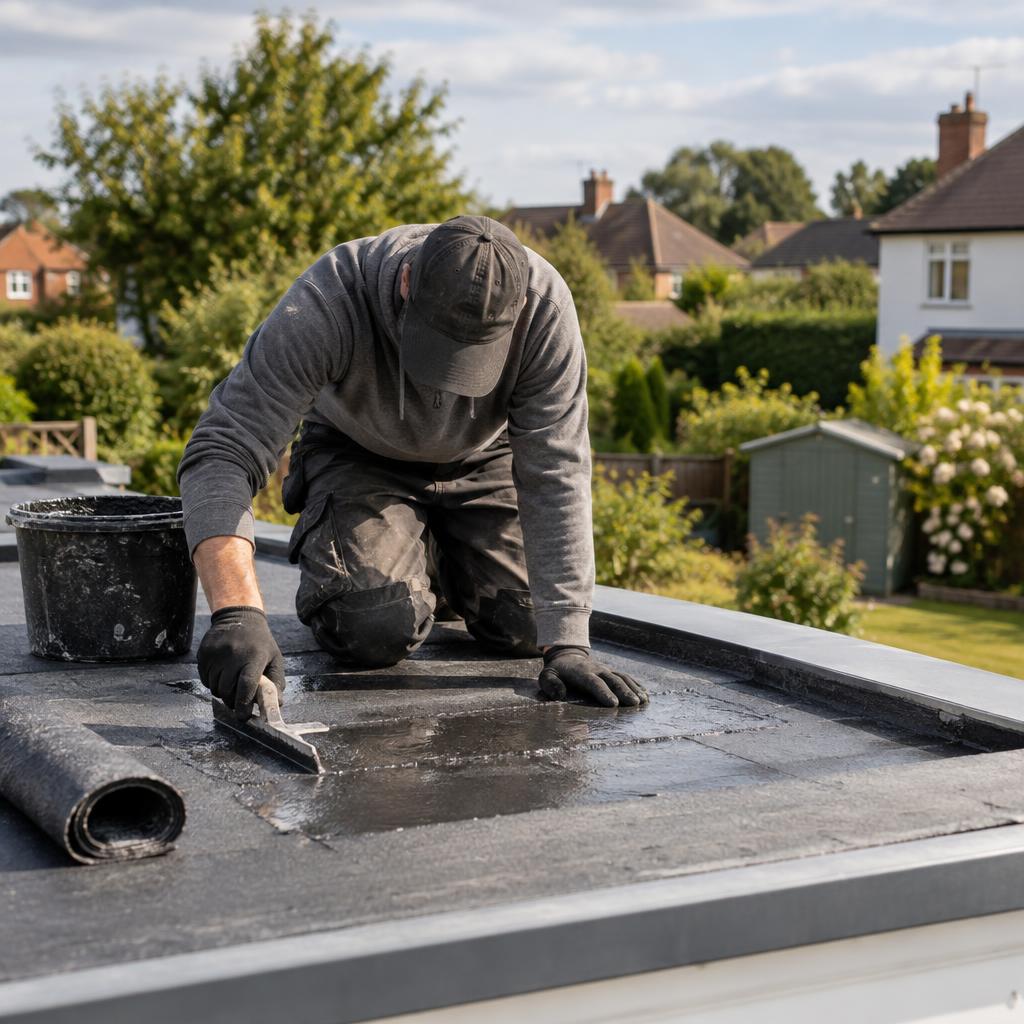
Understand flat roof faults, when a repair is worthwhile, when replacement makes more sense, and what a roofer’s quote should include.
Flat roof repairs are usually worthwhile when damage is localised and the surrounding roof covering, deck and insulation remain sound. If leaks are widespread, the deck is deteriorating or water is trapped beneath the covering, replacing part or all of the roof may be the more reliable option.
The important decision is not simply which sealant to use. It is whether the proposed work fixes the cause of the leak and leaves the whole roof functioning properly. Here is how to assess your options and agree a useful repair specification without stepping onto the roof yourself.
What is actually causing the leak?
A damp ceiling tells you where water has appeared, not necessarily where it entered. Water can travel along boards, joists or layers of roofing before reaching a visible stain. A patch directly above the stain may therefore miss the problem.
Common entry points include failed seams, splits in the covering, poorly sealed pipe penetrations and defective flashing where the roof meets a wall. Outlets and gutters can also become blocked, allowing water to back up around details that would normally shed it.
A flat roof should have a fall towards its drainage points. Persistent ponding can indicate inadequate falls, an obstructed outlet or movement in the deck. It does not automatically mean replacement is necessary, but it needs investigating rather than repeatedly coating over.
Condensation is another possibility, particularly where insulation and ventilation arrangements are unsuitable. A roofer should consider this if dampness is widespread or does not clearly follow rainfall.
From indoors or ground level, you can safely record:
- Where staining appears and whether it expands after rain.
- Whether leaks follow prolonged rain, wind-driven rain or both.
- Any visible gutter overflow or staining beneath an outlet.
- Previous repairs, roof paperwork and the approximate installation age, if known.
Do not climb onto the roof to inspect it. Roof coverings can be slippery, and a weakened deck may not support your weight.
How does the roof covering affect the repair?
Different coverings need different repair methods. The roofer should identify the existing system before recommending a product, because an incompatible coating or adhesive can fail to bond or damage the material beneath it.
Felt roofs often fail at laps, upstands and areas where the covering has split or lifted. Local repairs may involve renewing a section with compatible materials and forming properly sealed overlaps. Applying a smear of sealant over a moving crack is unlikely to address the underlying fault.
EPDM rubber roofs can suffer punctures, failed seams or problems with edge trims and wall junctions. Suitable repairs may use system-compatible patches, primers and seam products. The surface needs preparation in line with the repair system’s instructions; a generic adhesive is not a reliable substitute.
GRP fibreglass roofs can develop cracks, particularly around joints, trims or areas affected by movement. A professional repair may require preparing the laminate, rebuilding the damaged area and restoring the protective finish. Simply painting over a crack can leave the cause untouched.
Single-ply membranes require identification too. Some repairs involve specialist welding, and different membrane types are not automatically compatible.
Liquid-applied systems can be useful in suitable circumstances, but they are not a universal cure. Their performance depends on the condition and preparation of the substrate, treatment of joints and edges, and correct application.
When is repair better than replacement?
A targeted repair makes most sense when there is a clearly identified defect and the rest of the roof is serviceable. Examples include an isolated puncture, a failed outlet detail or a small area of defective flashing.
Ask the roofer what evidence supports repairing rather than replacing. The answer should cover more than the appearance of the top surface: the deck, insulation, drainage and junctions all matter.
Replacement becomes more reasonable when there are repeated leaks in different places, extensive cracking or deterioration, widespread moisture beneath the covering, or damaged decking. It may also provide an opportunity to correct poor falls or unsuitable detailing that small repairs cannot resolve.
An overlay means installing a new covering over an existing roof. This can sometimes avoid stripping everything back, but it is not suitable for every roof. The contractor needs to assess moisture, adhesion, structural condition, compatibility and the height available at upstands and thresholds. Covering wet or unsound materials can conceal rather than solve the problem.
Age alone is not enough to decide. An older roof with an isolated defect may still be repairable, while a newer roof with poor installation details may need substantial corrective work.
Ask for separate repair and replacement options where both are technically sensible, including the limitations of each.
What should a lasting repair include?
A sound repair should follow a clear sequence, even if the work itself is small.
- Establish the likely entry point and check nearby seams, flashings, outlets and edges.
- Assess the underlying deck and insulation where there are signs of hidden damage.
- Remove loose, deteriorated or unsuitable materials as necessary.
- Prepare the surface and allow it to dry sufficiently for the chosen system.
- Install compatible repair materials with the required overlaps, reinforcement or detailing.
- Check drainage and document the completed work.
Some defects cannot be fully assessed until a small area is opened. Agree in advance how the roofer will report hidden damage and obtain approval before expanding the work.
Weather matters. Roofing products have application requirements for temperature, moisture and curing. A contractor should explain whether a temporary measure is needed while waiting for suitable conditions, rather than presenting a wet-weather patch as a permanent repair.
Photographs before, during and after the work are useful, particularly for areas you cannot safely see. They should show the defect and the repaired detail, not just a distant view of the finished surface.
What should you check in a repair quote?
Compare the proposed scope rather than just the total. A cheaper quote may cover a surface patch while another includes opening the roof, replacing damaged decking and rebuilding a junction.
A useful written quote should identify:
- The defect being addressed and the area included.
- The repair system and any associated flashing, trim or outlet work.
- Safe access arrangements and protection of the property.
- Whether deck or insulation replacement is included or treated as additional work.
- Waste removal, weather protection and making good.
- The process for approving unforeseen work.
- Any workmanship guarantee and its exclusions.
Costs depend on access, roof size, material, complexity, hidden damage and whether scaffolding or other protective equipment is needed. A small leak beside a complicated wall junction can require more work than a larger, straightforward patch.
Ask whether the guarantee covers only the repaired area or a wider roof system. Product warranties and workmanship guarantees are different, and neither should be assumed to cover untouched parts of the roof.
Substantial re-roofing may require building regulations approval and insulation upgrades; a minor repair is not the same as renewing a roof covering. Requirements depend on the work and can change. Check GOV.UK or your local building control team; for a Southampton property, contact Southampton City Council.
When to call a professional
Flat roof repairs are not DIY work. Inspection on the roof, temporary coverings and permanent repairs need a professional with suitable access equipment and precautions against falls. Never assume a garage or extension roof is safe to walk on.
Arrange an assessment promptly for recurring leaks, spreading stains, sagging, visible deterioration or persistent ponding. If a ceiling is bulging, keep people away from the affected area and seek urgent help. Water near electrical fittings also needs assessment by a qualified electrician; notifiable electrical work should be handled by a registered electrician under Part P in England.
Tenants should report defects to their landlord or managing agent. Leaseholders and owners of shared buildings should establish responsibility and permission before commissioning work.
You can compare local, reviewed businesses on Local Trades & Business Recommendations and request quotes for free. Ask each roofer to explain the cause, the proposed fix and what remains outside the repair, so you can choose a lasting solution rather than another short-lived patch.