
Roofers
How to fix a leaking conservatory roof: causes and repairs
By Local Trades & Business Recommendations · Published
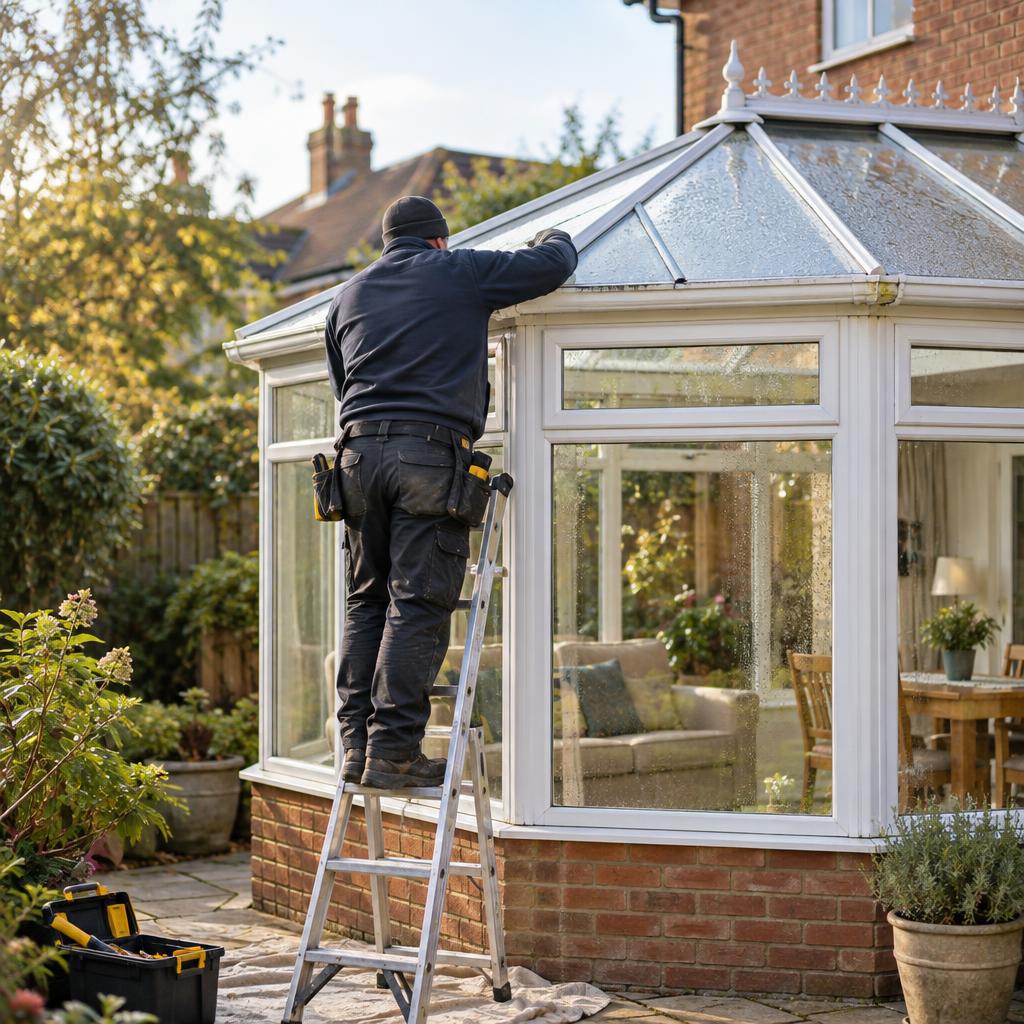
Identify why your conservatory roof leaks, understand the right repair for glazing, seals and flashing, and know what you can safely check before calling a specialist.
If you are wondering how to fix a leaking conservatory roof, the lasting solution is to identify where rain enters and repair the failed component, rather than cover the visible drip with sealant. You can record symptoms safely indoors, but roof access, moving glazing and external repairs need a professional.
Conservatory roofs have several potential entry points: glazing seals, panel edges, ridge caps, gutters and the connection to the house. Water can travel along a frame before dripping, so the wet patch is a clue, not proof of the fault’s location.
Is the water a roof leak or condensation?
First, establish when the water appears. Rain penetration usually follows rainfall, sometimes only when wind blows from a particular direction. Condensation forms when moist indoor air meets a cold surface and can occur without rain.
Widespread droplets on the underside of glazing, especially on cold mornings, suggest condensation. A repeatable drip from one glazing bar during rain points more towards a leak. Neither pattern is conclusive: condensation can collect and run towards a joint, while rainwater can spread across several sections.
Keep a short record before the inspection:
- Note whether it was raining, windy or dry when the water appeared.
- Photograph the first visible drip, not just the puddle underneath.
- Record whether droplets cover several panes or emerge from one joint.
- Note recent changes, such as drying laundry indoors or a glazing repair.
- Check whether water appears at the wall connection, ridge, panel edge or gutter side.
If condensation seems likely, improve ventilation using existing vents and reduce avoidable moisture, such as drying laundry indoors. Consistent background heating may also help. Do not block ventilation openings to stop draughts.
Misting trapped between the panes of a double-glazed unit generally indicates failure of that unit’s edge seal. It is different from surface condensation and does not, by itself, prove that rain is entering the room.
What can you check safely from inside?
Look from floor level or another safe, normally accessible position. Do not climb onto the roof, lean ladders against glazing or reach through an opening to inspect external joints. Conservatory panels are not safe walking surfaces, even if they look substantial.
Move furniture and electrical items away from drips where you can do so safely. Catch water in a stable container and protect the floor, but do not attach coverings to the roof or obstruct drainage channels.
If water reaches a light fitting, socket or electrical equipment, do not touch wet fittings or nearby switches. Isolate the affected circuit only if you can do so safely from a dry consumer unit, then seek an electrician’s advice.
Without dismantling anything, look for:
- A panel whose lower edge no longer lines up with neighbouring panels.
- A rubber gasket that looks shrunken, loose or displaced.
- Cracks in visible glazing or polycarbonate.
- Staining around the junction between the conservatory and house.
- Gutters overflowing during rain, viewed safely from the ground.
- Loose-looking ridge covers or end caps visible through the glazing.
Avoid pulling seals out to investigate. Some parts secure or weatherproof the glazing, and disturbing them can worsen the leak. Photographs and a description of the roof material are usually enough for an initial enquiry.
Which faults cause leaks, and what repairs work?
The repair should match the roof system. Glass and polycarbonate roofs may use different glazing bars, gaskets, retaining components and drainage arrangements. A conservatory specialist should identify the system before ordering parts.
A slipped panel can leave a gap near its upper edge. The solution may involve repositioning it and replacing failed retaining components, while checking that it is correctly supported. Simply pushing it back without addressing why it moved can leave the same problem waiting to recur.
Deteriorated or displaced gaskets can allow water past the panel edges. Compatible replacement gaskets may solve the problem if the glazing and framework remain sound. Covering old rubber with sealant is not an equivalent repair and can complicate later maintenance.
Cracked glass or split polycarbonate normally needs replacement of the affected pane or panel. The replacement must suit the existing system, including its dimensions, thickness and glazing specification. Damaged glazing is not a DIY handling job.
A leak along the house wall may involve the flashing or another part of the weatherproof junction. The roofer should inspect how that connection sheds water, rather than assume a bead of sealant along its surface will fix it. Water may also originate higher up the wall and appear at the conservatory roof.
Leaks at the ridge or around roof vents can arise from failed seals, damaged covers or incorrectly seated components. These need system-specific inspection, not a blanket coating over the joints.
Overflowing gutters or blocked outlets can send water where it should not go. Roof systems may also contain drainage paths within their profiles. The contractor should check these without sealing up intentional outlets.
Why can a sealant patch make the problem worse?
Sealant has legitimate uses where the roof manufacturer specifies it. The problem is applying it indiscriminately before establishing the cause.
A surface bead will not reliably correct a slipped panel, cracked glazing or faulty flashing. It may divert water elsewhere, trap moisture or obstruct drainage. An incompatible product can also damage some plastics or fail to adhere properly.
Ask the contractor what has failed, why the proposed product is suitable and whether old material needs removing. If a temporary repair is proposed, get a clear explanation of its limitations and the permanent work still required.
Do not drill drainage holes, tighten glazing-bar fixings or add expanding foam yourself. These actions can damage components or interfere with the way the roof accommodates movement.
After repair, the contractor may carry out a controlled water test if appropriate. This should help check the suspected entry point without forcing water into joints unnaturally. Keep monitoring during subsequent rain and report any recurrence promptly.
Should you repair the roof or replace it?
An isolated failed gasket, damaged panel or local flashing defect does not automatically justify replacing the whole roof. Targeted repairs are often worth considering when the framework is sound and suitable components remain available.
Replacement becomes more relevant when several components are failing, the framework has moved or deteriorated, or earlier repairs have not addressed widespread defects. Ask the contractor to distinguish evidence of general failure from a single repairable fault.
Before authorising work, check any installation guarantee and contact the original installer if appropriate. Unapproved alterations may affect cover. Tenants should report leaks to their landlord or managing agent rather than commission roof alterations themselves.
Cost depends on access, roof size and material, the availability of matching parts, glazing handling requirements and any concealed damage. Request written quotes that identify:
- The diagnosed fault and proposed repair.
- Parts to be replaced and how compatibility will be checked.
- Safe access arrangements and waste removal.
- Testing, exclusions and the repair guarantee.
Changing to a substantially different roof, particularly a heavier one, requires more than a leak repair. Structural suitability and building regulations may need assessment. Requirements depend on the proposal; check GOV.UK and your local council’s building control service before proceeding.
When to call a professional
Call a conservatory roof specialist or roofer experienced with your glazing system whenever repairs involve roof access, panels, external seals, flashing or gutters at height. Working at height and roof repairs need a professional.
Seek urgent help for cracked or loose glazing, visible sagging, significant movement or water near electrics. Keep people away from the affected area and do not attempt to support or reposition the roof yourself.
For a Southampton property, look for relevant conservatory repair experience, suitable insurance and a written diagnosis rather than choosing solely on the lowest quote. Readers can compare local, reviewed businesses on Local Trades & Business Recommendations and request quotes for free.