
Landscapers
How to clean artificial grass without damage or lingering smells
By Local Trades & Business Recommendations · Published · Updated
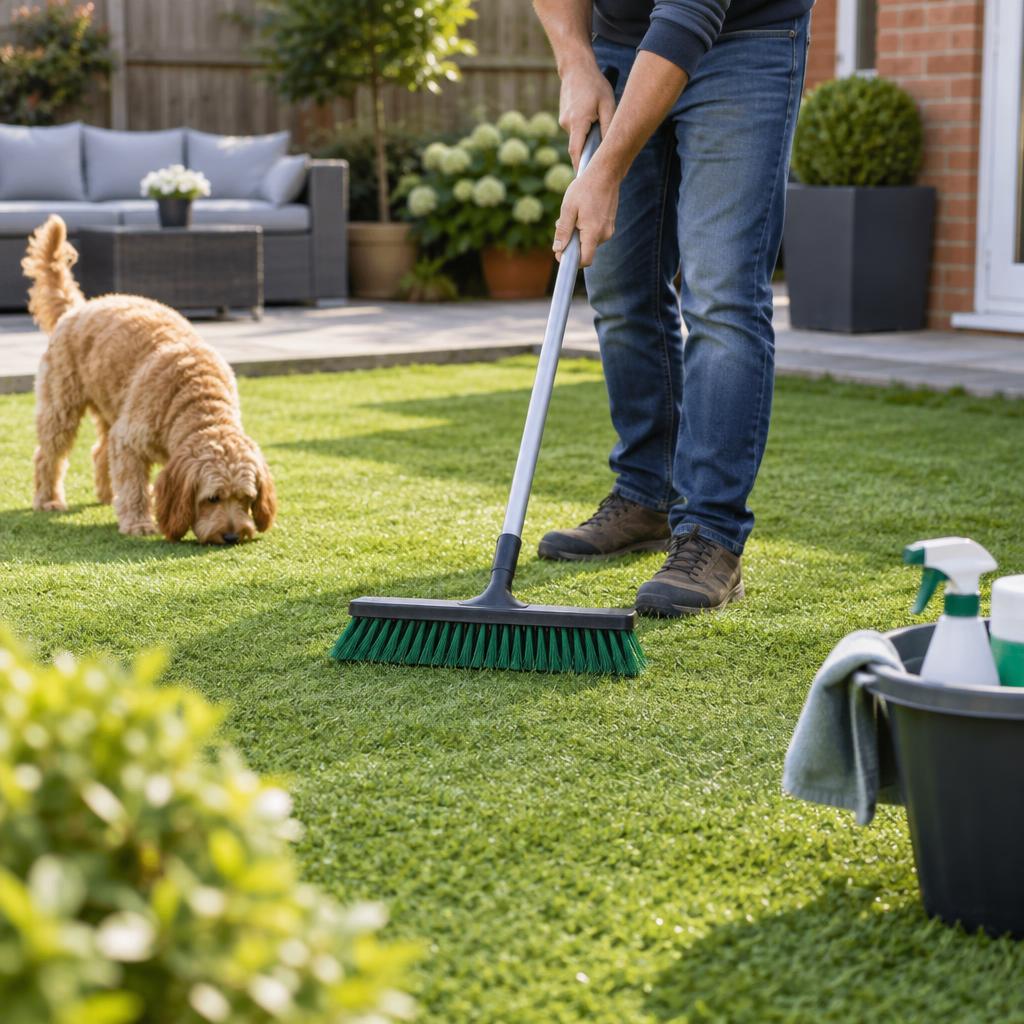
Clean artificial grass safely with practical advice on brushing, pet urine, stains and moss, plus how to spot drainage problems that cleaning cannot fix.
To answer how to clean artificial grass: remove loose debris, brush gently against the pile, then rinse away dirt using a garden hose on a gentle setting. Treat pet waste and stains promptly with a cleaner approved for your particular grass, and avoid harsh chemicals, strong pressure jets and excessive heat.
Artificial lawns still need maintenance. Leaves, soil, food and animal waste can collect between the fibres, while flattened areas need brushing rather than stronger cleaning products. Start with the gentlest method and check your supplier’s care instructions, especially if the lawn has sand infill or is still under warranty.
What should you use to clean artificial grass?
For routine cleaning, you usually need a stiff, non-metallic broom or artificial-grass brush, a plastic leaf rake, a dustpan or scoop, and a garden hose. A bucket, soft cloth and absorbent kitchen paper are useful for spills.
Choose bristles that lift the fibres without snagging them. Avoid wire brushes and metal rakes, which can damage the pile or catch the backing and joins. A leaf blower on a low setting can help with dry leaves, but stop if it starts moving infill.
If water alone is not enough, check which cleaning products your grass manufacturer permits. A small amount of mild detergent diluted in water may be suitable for some products, but do not assume that every household cleaner is safe. Test any permitted cleaner in an inconspicuous area first.
Avoid bleach, solvents, boiling water and steam cleaners unless the manufacturer explicitly allows the treatment. Never mix cleaning products, particularly bleach with other cleaners or urine residues. Keep children and pets away while cleaning, and follow the product’s instructions on rinsing and when the surface can be used again.
How do you clean the whole lawn step by step?
Choose a time when you can clear the lawn and let it drain before using it again. Remove toys, plant pots and lightweight furniture so you can reach dirt trapped underneath.
- Pick up litter, stones and solid animal waste before brushing. Wear gloves when handling waste.
- Collect leaves and twigs with a plastic rake, broom or leaf blower. Work gently around edges and seams.
- Brush against the direction in which the fibres lie, using short, controlled strokes. Concentrate on paths, seating areas and other flattened patches.
- Rinse with a hose on a gentle spray, working in manageable sections. Direct dirty water away from the house without washing it onto neighbouring land.
- Spot-clean remaining marks with an approved cleaner, following its dilution and contact-time instructions.
- Rinse as directed, allow the surface to drain and brush any remaining flattened areas once the fibres are dry.
Do not scrub repeatedly at one patch: this can disturb infill or strain the fibres. If the lawn contains sand, check that brushing has not left bare patches or piles. Ask the installer about redistribution or topping up rather than adding ordinary building sand.
Avoid using a household vacuum cleaner, which may remove infill and is generally unsuitable for damp outdoor surfaces. Specialist artificial-turf equipment is different, but it must still be appropriate for your installation.
A weekly check is a useful starting point, with debris removal and brushing as needed. Clean more often beneath shedding trees or where pets regularly toilet. Rain can rinse away some loose dust, but it does not replace removing waste or treating contamination.
How do you remove dog urine, poo and pet smells?
Pick up solid waste promptly using a bag or scoop. If waste is soft, lift off as much as possible before rinsing; brushing it first spreads contamination deeper into the pile. Clean the affected patch with a pet-safe product approved for artificial turf.
For urine, rinse the toileting area promptly when practical. Use enough water to carry contamination through the surface, provided the lawn drains freely. A light mist may wet the fibres without flushing the affected area properly.
Where smells persist, consider a turf-compatible enzymatic cleaner intended for pet urine. These products need the correct dilution and contact time to work. Some should remain on the surface for a specified period, so do not automatically rinse them off immediately.
“Pet-safe” does not mean safe in every concentration or while freshly applied. Follow the label, prevent licking or access during treatment, and only let animals return when instructed.
Avoid relying on scented products that merely mask odours. Household powders and improvised vinegar mixtures may leave residues, affect materials or conflict with the manufacturer’s guidance.
If smells return quickly after correct cleaning, contamination may have reached the infill or layers beneath the grass. Repeatedly applying stronger cleaner will not fix poor drainage or an unsuitable base. Ask an installer to assess the affected area.
How should you tackle mud, food, moss and weeds?
For ordinary mud, let the surface deposit dry before gently brushing it loose and collecting it. Rinse away the remainder. Avoid rubbing wet soil into the pile or using sharp tools to scrape it out.
Blot drinks and fresh food spills with an absorbent cloth, working from the edge towards the centre. Remove solids carefully, then use water or a manufacturer-approved cleaning solution. Rinse away cleaner residue as instructed so it does not remain between the fibres.
Grease, paint, adhesive and chewing gum need more caution. Do not reach for white spirit, acetone or paint stripper: these may damage fibres, backing or seam adhesive. Ask the grass supplier for a treatment suitable for both the stain and the turf.
Moss and algae are more likely to remain troublesome where debris, shade and persistent damp coincide. Gently remove loose growth, clear nearby leaves and check whether water drains away. Only use a moss or algae treatment whose label and the grass manufacturer’s guidance permit that application. Avoid washing treatment into ponds or drains.
Small weeds can sometimes root in debris resting on top of the grass. Pull them gently by hand when easy to remove, taking care not to lift edges or joins. Repeated growth through seams or around lifting edges needs investigation rather than forceful pulling or indiscriminate weedkiller use.
Can you pressure wash artificial grass, and what affects cleaning costs?
A garden hose is the safer default. Pressure washing can displace infill, flatten or damage fibres and strain seams, particularly if the jet is concentrated or held close to the surface.
Only pressure wash if your manufacturer explicitly permits it, and follow its pressure, nozzle and distance guidance. There is no single safe setting for every artificial lawn. Avoid directing water underneath edges or into joins.
Stop rinsing if water pools instead of draining. Check for visible surface debris and blocked drainage outlets that you can reach safely, but do not puncture the backing or dig beneath the lawn. Persistent puddles may indicate a base or drainage problem.
Before using a hose, check your water supplier’s current restrictions and whether they cover your intended cleaning method. This matters for households across Hampshire as well as elsewhere; permitted uses can change.
Professional cleaning costs depend on lawn size, access, contamination, pet odours, infill condition and whether repairs are needed. Ask for written quotes explaining whether waste removal, brushing, stain treatment and any infill work are included. A cleaning quote should distinguish surface maintenance from drainage or base repairs.
When to call a professional
Call an artificial-grass installer or landscaper if puddles persist, odours quickly return, seams separate, edges lift or fibres appear melted or damaged. Cleaning cannot repair heat damage, failed joins or an unsuitable base.
Get specialist advice before treating substantial oil or chemical spills. For sewage contamination, keep people and pets away and seek professional cleaning and drainage advice rather than attempting a routine wash.
A professional is also sensible when heavy moss covers a large area or you cannot clean safely without awkward lifting or access. Tell them the grass brand, approximate age, whether it contains infill and which products you have already used.
You can compare local, reviewed businesses on Local Trades & Business Recommendations and request quotes for free. Choose someone who explains the cause of the problem and proposes a method compatible with your lawn, rather than simply promising a stronger chemical clean.