
Automotive
Why do MOT tests include an exhaust emission test?
By Local Trades & Business Recommendations · Published · Updated
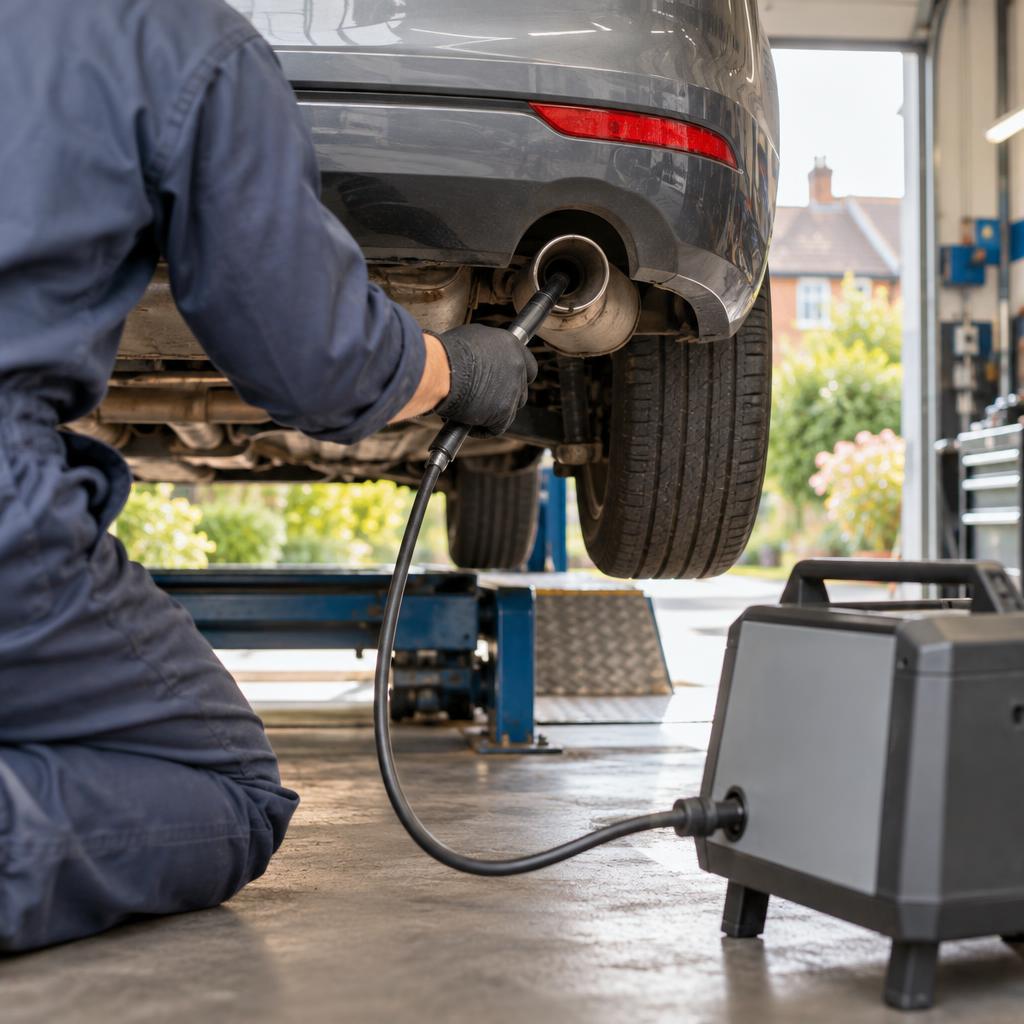
Learn why MOT emissions are checked, how petrol and diesel tests differ, what causes a failure and which repairs or checks may help.
MOT tests include an exhaust emission test to check that a vehicle’s exhaust pollution stays within the limits that apply to it and that key emissions-control equipment is present and working. If you are asking “why do MOT tests include an exhaust emission test”, the practical answer is that a car can seem to drive normally while releasing excessive pollution or hiding an engine fault.
Why are exhaust emissions part of roadworthiness?
An MOT checks specified safety and environmental standards at the time of the test. Brakes, tyres and lights are important, but so is controlling the pollution a vehicle produces when its engine runs.
An engine burns fuel to produce power. The exhaust gases can contain carbon monoxide, unburnt hydrocarbons, nitrogen oxides and particles. Different pollutants have different effects, including harm to health and contributions to poor air quality. Emissions-control systems reduce some of these substances before they leave the exhaust.
The emissions check helps identify vehicles that are exceeding their applicable limits. It can also reveal problems such as poor combustion, faulty fuel control or damaged exhaust-treatment equipment.
However, an MOT is not a complete assessment of a vehicle’s environmental impact. The standard exhaust test does not directly measure every pollutant under real-world driving conditions. Passing also does not mean the engine is perfectly healthy or that the car will remain compliant until its next MOT. Regular servicing still matters.
What does the exhaust emission test measure?
The procedure depends on the vehicle’s fuel type, age and specification. Petrol and diesel engines produce different exhaust characteristics, so they are not tested in the same way.
For most petrol cars, the tester uses an exhaust analyser to measure carbon monoxide and hydrocarbons. Where the applicable procedure requires it, the test also checks lambda: an indicator of whether the engine is running with the correct balance of air and fuel.
Carbon monoxide can rise when combustion is incomplete. Excess hydrocarbons can indicate unburnt fuel, potentially caused by a misfire or another combustion problem. An incorrect lambda result can suggest a fuel-control problem, although an exhaust leak can also affect readings.
Most diesel cars undergo a smoke-opacity test. This measures how much light is blocked by the exhaust smoke while the engine is accelerated according to the prescribed procedure. Excessive smoke may indicate a combustion, air-supply, fuel-injection or emissions-control problem.
The tester also checks relevant exhaust and emissions-control components. Depending on the vehicle, missing or obviously modified equipment, excessive visible smoke or an illuminated engine malfunction indicator lamp can cause failure.
A diesel particulate filter, or DPF, traps soot. If a vehicle was fitted with one as standard, evidence that it has been removed or tampered with can lead to an MOT failure. Passing the smoke measurement alone does not override that defect.
The standard MOT exhaust test is not a direct carbon dioxide measurement used to calculate road tax. It is also not a comprehensive nitrogen-oxide test.
Do all vehicles have the same emissions limits?
No. Applying one modern limit to every vehicle would ignore differences in engine design and the standards applicable when vehicles entered service.
The tester follows the relevant procedure using details such as fuel type, date of first use and, where applicable, vehicle-specific emissions information. Older vehicles may have different limits or a different form of check from newer ones. Certain vehicles are exempt from an instrumented emissions test.
A fully electric car has no combustion-engine exhaust, so it does not undergo an exhaust emissions test. It still needs the other applicable MOT checks when an MOT is due. Hybrids are not all treated identically: the requirements depend on their engine type and the official testing procedure.
For a diesel vehicle, a manufacturer’s emissions plate value may determine the smoke limit rather than a general default. That is one reason an online claim that “all diesels must meet this number” can be misleading.
If you are unsure which standard applies to your vehicle, ask the MOT station to explain the test used. Current testing requirements are available through GOV.UK and the Driver and Vehicle Standards Agency’s MOT inspection guidance. These are more reliable than comparing your results with those from a different model.
What causes an emissions failure, and what happens next?
An emissions failure is a finding, not a diagnosis. A high reading does not automatically mean the catalytic converter or DPF needs replacing.
Possible causes include:
- Worn spark plugs, ignition faults or other causes of a petrol-engine misfire.
- Faulty sensors or fuel-system problems that upset the air–fuel mixture.
- Intake or exhaust leaks that affect engine operation or test readings.
- A damaged or ineffective catalytic converter.
- Diesel injector, turbocharger or air-supply faults causing excessive smoke.
- A blocked, damaged or tampered-with DPF.
- Engine wear that allows excessive oil burning.
Ask for the emissions printout as well as the MOT failure record. The readings, limits and any related defects help a garage decide what to investigate. Diagnostic fault codes can provide useful clues, but a code naming a sensor does not necessarily prove that the sensor itself needs replacing.
Avoid authorising an expensive exhaust-treatment replacement without a clear diagnosis. For example, replacing a catalytic converter without repairing an underlying misfire can allow the same fault to damage the replacement.
The repair cost depends on the cause, access to components, parts availability and the time needed for testing. Ask for a quote that separates diagnosis, repairs and any retest charge. Retest arrangements depend on when and where the vehicle returns and what work is required, so confirm them with the testing station.
Do not assume an existing MOT certificate makes a failed vehicle safe or lawful to drive. It must remain roadworthy, and you must not drive it with a dangerous defect. Check GOV.UK for the current rules on driving after an MOT failure; arrange recovery if necessary.
How can you prepare without relying on quick fixes?
Good preparation means maintaining the vehicle, not trying to disguise a fault. No additive or special journey can guarantee a pass.
Before the appointment:
- Check the service history and whether routine maintenance is due.
- Check the engine oil and coolant as described in the handbook, with the engine in the appropriate condition.
- Arrange diagnosis of persistent engine warning lights, misfires, smoke or loss of power.
- Tell the tester about known engine problems, unusual noises or recent repairs.
- If the vehicle is safe to drive, follow the station’s advice about arriving with the engine at normal operating temperature.
A cold engine or catalytic converter may not perform as intended during testing. Normal driving before the appointment can help the vehicle reach operating temperature, but it will not repair defective equipment.
For a diesel mostly used on short trips around Southampton, tell the garage about that usage if a DPF warning appears. Some vehicles need particular conditions to complete regeneration, but the correct response depends on the model and warning displayed.
Follow the handbook rather than attempting a hard motorway run regardless of symptoms. Some warnings require professional diagnosis instead. Never attempt a forced DPF regeneration yourself.
Do not rev a stationary engine repeatedly to “clear it out”, and never run it in a garage or other enclosed space. Exhaust fumes can be fatal. Exhaust components also become extremely hot, and nobody should work beneath a vehicle supported only by a jack.
When to call a professional
Book a qualified garage if the car fails its emissions test, repeatedly displays an engine or DPF warning, produces persistent smoke, runs roughly or uses noticeably more fuel or oil. If you smell exhaust inside the cabin, stop using the vehicle and arrange an inspection.
Stop safely and seek urgent advice for severe power loss, overheating or a flashing engine warning light, especially with rough running. Do not continue driving simply to warm the engine for an MOT.
Choose a garage that can explain the readings, investigate the underlying cause and confirm the result after repairs. Removing emissions-control equipment is not a legitimate repair.
You can compare local, reviewed businesses on Local Trades & Business Recommendations and request quotes for free. Share the failure record, emissions printout and symptoms so garages can advise on the right next step.